
Commercial real estate owners have spent decades writing big checks to technology vendors – and handing over something even more valuable in the process: control.
Not control in the abstract sense. Control over the networks running inside their buildings. Control over the data those systems generate every single day. Control over what gets fixed, what gets upgraded, and what strategy their property actually follows. In deal after deal, that control quietly migrates from the owner to the vendor. And most owners never notice until something breaks – or until they try to sell.
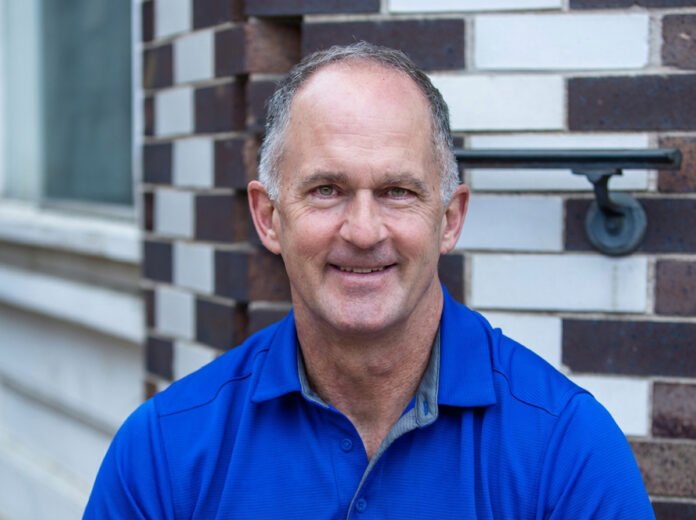
Bill Douglas, CEO of OpticWise, has seen this play out across hundreds of properties. His conclusion is blunt: the commercial real estate industry has the vendor relationship completely backwards.
The Costly Habit of “Show Me What You’ve Got”
Walk into almost any CRE technology conversation and you will find the same script. The owner brings in a vendor. The vendor presents their roadmap. The owner reviews it, nods, and signs. Three years later, that owner is still waiting for the vendor’s product to catch up with what their building actually needs.
It is a habit that has calcified over decades – and it is costing owners far more than they realize.
“When you own a commercial real estate asset, you are the one writing the checks,” says Douglas. “You should be setting the direction. Your vendors should be responding to your strategy, not defining it.”
This is not a minor operational quibble. It is a fundamental question of who is actually in charge of one of the largest asset classes in the world.
Good Vendors Are an Asset. Passive Vendor Relationships Are a Liability.
To be clear: OpticWise is not anti-vendor. The best vendor relationships in CRE are genuinely collaborative, and Douglas is the first to say so.
Vendors work across dozens of properties. They see failure patterns, efficiency wins, and emerging risks that no single owner could catch on their own. That cross-portfolio visibility has real value – but only when the owner is directing the conversation, not being led by it.
The distinction matters. Sharing best practices is not the same as outsourcing your strategy. A vendor’s job is to solve your problem, not to define what your problem is.
When owners make that shift – telling vendors what they need rather than asking what the vendor offers – the whole dynamic changes. Vendors adapt. Solutions get built around real requirements. And owners stop paying for roadmaps that were designed for someone else’s building.
The Lock-In Nobody Talks About
Vendor dependency in CRE runs deeper than contracts. It runs through data.
When an owner does not control their own data and digital infrastructure, they are not just dependent on a vendor for service. They are dependent on that vendor for information about their own building. Operational data sitting in a vendor’s cloud can only be seen through that vendor’s lens. Owners cannot run independent analysis, benchmark performance across properties, or take that intelligence with them if the relationship ends.
This is the lock-in that is hardest to escape – and the one OpticWise was built to solve.
When owners control the networks, systems, and data their property generates, the calculus shifts entirely. Switching vendors becomes a real option rather than a painful disruption. Portfolio-level comparisons become possible. Data travels with the asset, not with the contract.
What It Looks Like When Ownership Changes
OpticWise has worked with clients through property sales, management transitions, and full asset repositioning. The owners who move through those changes most cleanly are the ones who built their digital infrastructure to be owner-controlled from day one.
The building changes hands. The property manager turns over. But when data and digital systems are structured correctly, the operational intelligence about that asset stays with it – because it was built that way intentionally.
The buildings that struggle are the ones where every vendor relationship is a silo. Operational information is scattered across a dozen logins and a dozen platforms that only the vendor fully understands. When something breaks – or when an owner simply wants answers – they are at the mercy of whoever holds the keys.
Across a multi-asset portfolio, this compounds fast. Without consistent, comparable data across properties, owners cannot benchmark performance, spot outliers, or allocate capital with confidence. They are managing blind.
Three Questions Worth Asking Before the Next Renewal
Before signing the next vendor contract or technology purchase order, Douglas recommends starting here:
Do you have a written digital strategy for your property or portfolio? Not a vendor subscription. Not a product contract. A clear, owner-defined roadmap for where the asset is headed digitally over the next three to five years.
Do you own and control the data your building generates? If your systems went offline tomorrow, could you package and transfer your operational data? If the answer is no, you do not truly own it.
Are you telling vendors what you need, or asking them what they offer? That question alone reveals who is actually running your technology investment.
You Cannot Lead Until You Know What You Own
Most owners cannot answer those questions with confidence – not because they lack capability, but because no one has ever mapped it out for them. That is the starting point.
OpticWise’s Peak Property Performance DDI Review is designed to do exactly that: clarify what data and digital infrastructure an owner actually controls, identify where data is going, and surface the vendors, systems, and gaps that are costing money or leverage the owner does not even know they have.
The buildings winning on operations, tenant experience, and long-term asset value are not waiting for vendors to hand them a strategy. They are writing one – and then demanding their vendors meet it.
OpticWise designs, deploys, and operates owner-controlled data and digital infrastructures for multi-tenant commercial real estate across the United States. To explore the Peak Property Performance® book and podcast, visit peakpropertyperformance.com.
Disclosure: Individuals or companies mentioned may have a commercial relationship with KeyCrew.