
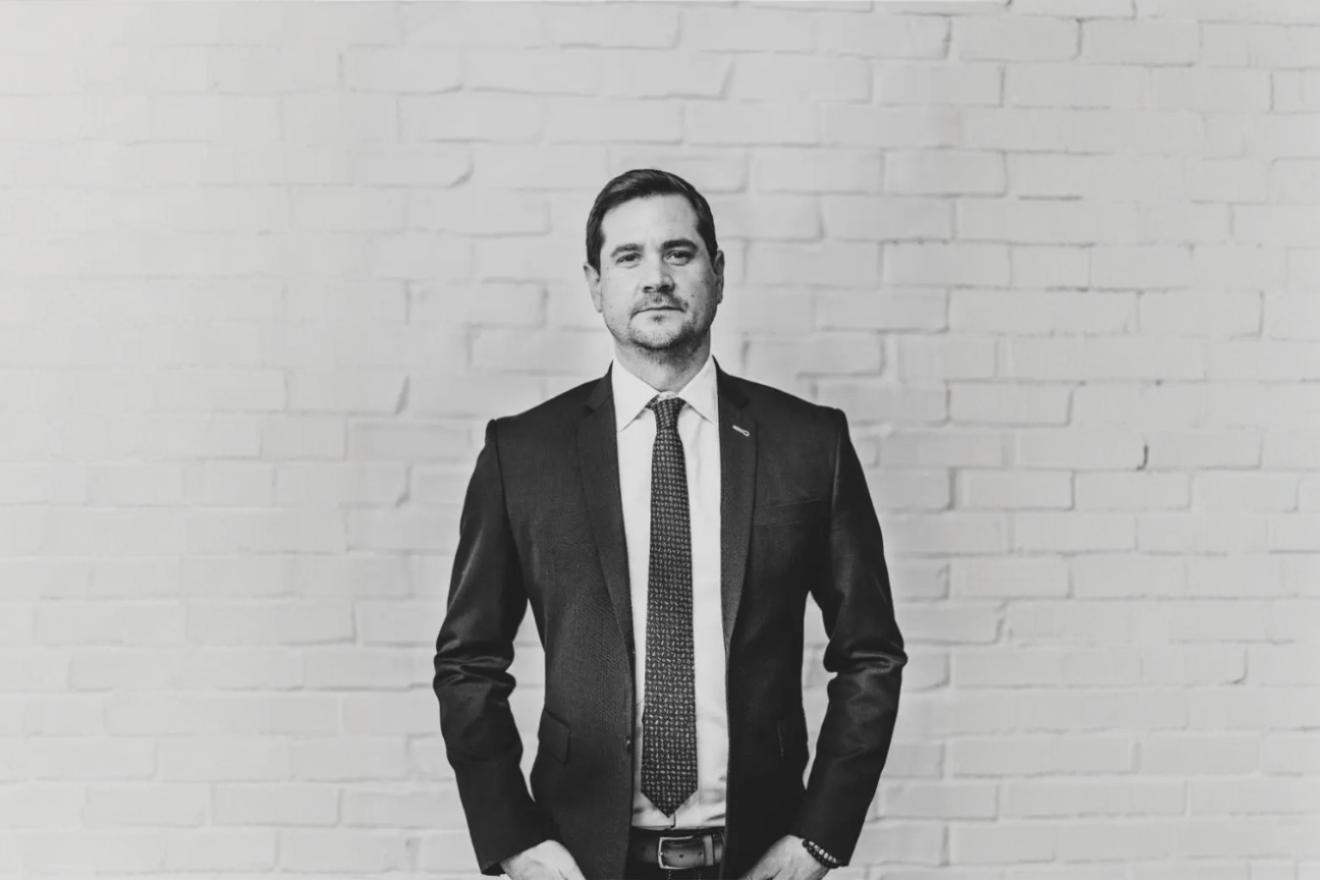
The Canadian real estate investment landscape is experiencing significant shifts as interest rate pressures and overleveraged portfolios create opportunities for nimble investors. Virtus Diversified REIT, under the leadership of President Josh Will, has positioned itself to capitalize on these market dislocations through a patient, resourceful approach that differentiates it from larger competitors.
Founded in 2020 through a partnership between Josh Will and industry veteran Aurelio, Virtus REIT has built its strategy around flexibility and market timing. Unlike many REITs that focus on specific asset classes, Virtus maintains a deliberately diverse approach across secondary and tertiary markets in Canada and the United States.
“Our differentiator is that we wanted to be opportunistic and have diverse holdings,” Will explains. “What we wanted to do was be opportunistic and take advantage of dips in the market, and not have a mandate where we’re pigeonholed into having to chase one asset class.”
Strategic Market Positioning
This flexibility has proven valuable during recent market volatility. While many competitors expanded aggressively during the pandemic-era bull run, Virtus took a contrarian approach. “We kind of stood back and went, ‘This is tough for us to make money in this market,’” Will notes, describing their decision to slow capital raising when cap rates compressed and bidding wars became commonplace.
Virtus grew slowly for its first five years, acquiring only six properties. However, current market conditions have accelerated their activity. The REIT now holds 17 properties with another five under contract, representing approximately $115 million in real estate under due diligence.
“Right now we’re seeing deals in markets where typically a lot of our competitors don’t buy,” Will explains. “We focus on the secondary and tertiary markets that still need to be serviced.” This focus on smaller markets like Sudbury, Pembroke, and Timmins, Ontario, allows Virtus to compete effectively against larger players who require bigger deal sizes to move the needle on their portfolios.
Market Opportunities and Vendor Motivations
The current environment has created compelling opportunities for Virtus. Many property owners are facing balance sheet pressures, leading them to sell quality assets to address problems elsewhere in their portfolios. “The people are selling based on the fact that they might have issues on the other side of their portfolio,” Will observes. “They’re selling their prized possessions in a market like this to get the top dollar, pull out the most equity, so they can put the fire out on the other five or six properties.”
These distressed situations often involve off-market transactions facilitated by Aurelio’s extensive network of real estate professionals. The deals frequently involve creative structuring, including asset swaps where vendors take back units in the REIT rather than cash, providing them with ongoing cash flow while reducing their management responsibilities.
“What’s really cool about some of the deals we’re doing is we’re doing asset swaps,” Will explains. “The vendor took back a million and a half in units in our trust. They like the cash flow from it, so now they get cash flow from the asset they sold, they’ve de-risked themselves, and it’s a lot more tax efficient for them as well.”
Investment Philosophy and Returns
Virtus operates on a straightforward investment philosophy focused on cash flow generation rather than speculative appreciation. The REIT targets a 7% return of capital to investors, with an additional 3-4% upside from net asset value appreciation driven primarily by mortgage principal reduction.
“Our philosophy is, if we can buy it and kick out 7% cash flow to investors and maybe have another 3-4% upside, great,” Will states. “If interest rates go down and our equity goes up, it’s all a bonus. That’s not part of our philosophy.”
This conservative approach reflects lessons learned from multiple market cycles. Aurelio’s experience through the early 1990s crash, the dot-com bubble, the 2008 credit crunch, and COVID-related volatility has shaped the REIT’s risk management approach. “We’ll control what we can control. We can control this building. We can control the rent roll of people coming and going. But the market’s going to do whatever it’s going to do.”
Virtus currently achieves a 6.7% cap rate across its portfolio, outperforming many competitors in the current environment. Their most recent acquisition generated a 6.2% cap rate, demonstrating their ability to find attractive yields even as markets have shifted.
Expanding Geographic Focus
Current market conditions have allowed Virtus to expand beyond their traditional tertiary market focus. The REIT now has properties under contract in larger secondary markets including London, Kitchener, Niagara, and downtown Hamilton.
“What we’re seeing now is that we don’t necessarily need to go that far out of the peripheral to get the rates of return that we require,” Will explains. “Markets have gotten a little bit closer to us because people are starting to sell some of their core assets that are more marketable in a market like this.”
This geographic expansion reflects market dynamics where assets in more desirable locations are available at attractive pricing due to vendor distress rather than property issues.
Capital Raising Strategy
Virtus has maintained a disciplined approach to capital raising, timing their fundraising efforts to coincide with acquisition opportunities. This contrasts with competitors who raised capital aggressively during the pandemic and then struggled to deploy it effectively.
“In our space, if you raise money, you got to put it out,” Will notes. “Dollar in, dollar has to go, because if we’re dragging cash, that’s just going to kill our rate of return.”
The REIT currently manages approximately $140 million in assets under management, a size that allows meaningful impact from relatively modest capital raises. “When we raise $10-15 million we can move the needle, because we’re only at about $140 million in AUM, whereas some of our competitors need to raise hundreds of millions of dollars to make good buys that move the rate of return for clients.”
Looking Forward
As market conditions continue to evolve, Virtus is positioning for accelerated growth. The combination of their patient approach during the bull market and current market dislocations has created what Will sees as an optimal environment for their investment strategy.
“I think we’re lucky that we’ve had this bull run,” Will reflects. “I think it might be time to look at repositioning portfolios, take some of that house money off and go to a new manager and say, ‘You know what, we did really well over here. Let’s keep our money there, but let’s take a little bit of the made money off and go do it again.’”
For institutional investors and family offices seeking exposure to real estate in the current environment, Virtus REIT’s combination of market timing, geographic diversification, and cash flow focus offers a compelling alternative to larger, more rigid investment structures. Their ability to remain opportunistic while maintaining disciplined underwriting standards positions them well to capitalize on continued market volatility.
The REIT’s success demonstrates that in uncertain markets, flexibility and patience can be more valuable than size and aggressive growth strategies. As market conditions continue to create opportunities for discerning buyers, Virtus REIT’s approach may prove prescient for investors seeking steady returns in an increasingly complex real estate landscape.