
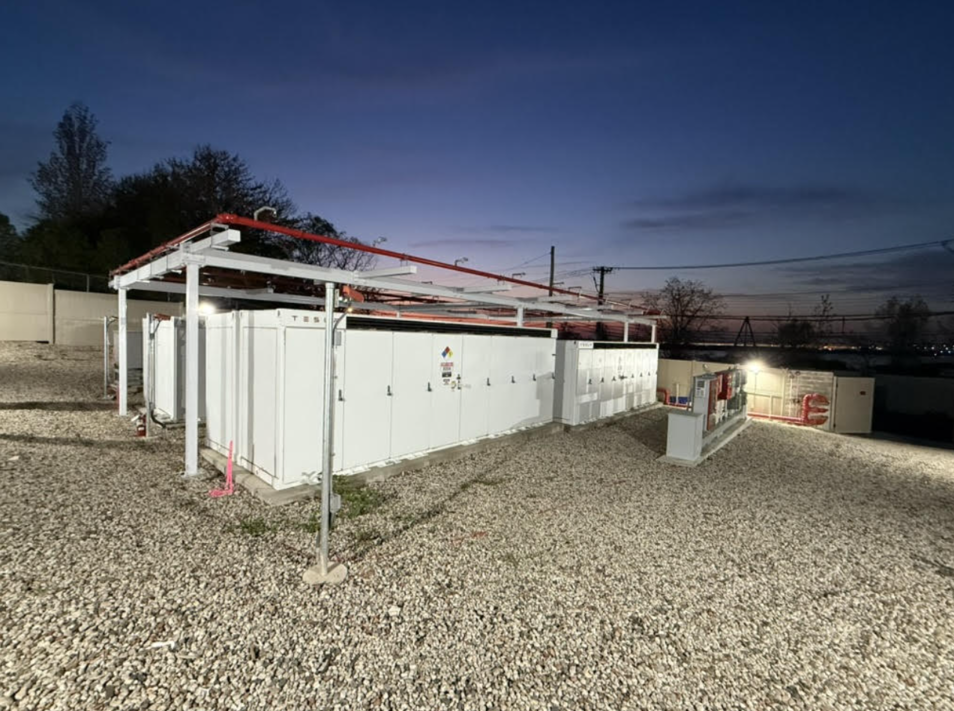
The race to decarbonize America’s cities has created a new asset class that’s capturing attention from institutional investors—urban energy storage. As renewable energy sources become more prevalent, the need for sophisticated battery systems to manage intermittent power generation has shifted from a niche technology to essential grid infrastructure.
NineDot Energy, a New York City-focused energy storage developer, exemplifies this emerging sector. The company has positioned itself at the intersection of urban development, environmental justice, and institutional investment, developing battery storage projects specifically designed to serve dense metropolitan areas where energy demand is highest.
“Energy storage can be viewed as the glue for a net zero future,” explains Sam McGarvey, who leads project origination at NineDot Energy. “There’s a lot of intermittent resources out there, solar, wind. With these intermittent sources of energy, energy storage is needed to store excess clean energy on the grid.”
From Real Estate to Renewable Infrastructure
McGarvey’s path to energy storage reflects a broader trend of real estate professionals moving into infrastructure investments. After spending years in real estate investing and finance, he was drawn to NineDot Energy’s unique positioning.
“I was always very passionate about decarbonization and the environment,” McGarvey notes. “Three and a half years ago, I was looking to make a pivot to a company that sat at the intersection of decarbonization, the built environment, and urban environments. NineDot checked all those boxes.”
Founded in 2015, NineDot Energy reached its current form around 2020-2021 when it secured institutional backing from Carlyle Group. This capital infusion enabled significant expansion, with the company recently reaching 80 employees and developing an ambitious pipeline of projects across New York City’s outer boroughs.
The Urban Development Challenge
Developing energy storage in New York City presents unique challenges that distinguish it from rural renewable projects. Unlike traditional solar or wind farms built on inexpensive rural land, urban energy storage must compete with other development uses while navigating complex regulatory environments.
“Building in New York City is very difficult and tricky,” McGarvey acknowledges. “We don’t receive a single building permit like you would in a more rural municipality. There’s over a dozen permits and approvals to receive from various agencies.”
The company focuses on vacant land throughout the outer boroughs, often targeting underutilized properties with complex histories. This approach often involves environmental remediation, turning the development process into urban renewal. “We are very willing to get our hands dirty to clean up and improve historically underutilized or dirty lots that other developers shy away from because of existing or historical uses.”
Competing for Urban Land
NineDot Energy competes not only with other energy storage developers but with any project seeking to develop vacant land.
“We’re competing against people looking to build single-story industrial, retail, or other uses,” McGarvey explains. “Because our projects can be built on various zoning districts, we’re oftentimes not the highest bid, and that’s the reality we contend with.”
However, the company has found success by following utility signals indicating where grid support is most needed. “Con Edison sends signals saying they really need energy storage in this part of Brooklyn, Queens, or Staten Island. We follow these signals, and so do other developers.”
Institutional Interest and Market Evolution
As NineDot Energy has grown, it has attracted attention from larger, more institutional landowners. This shift reflects growing recognition of energy storage as a legitimate asset class with attractive long-term revenue characteristics.
“Two or three years ago, we focused mainly on smaller vacant lots, often with generational ownership,” McGarvey observes. “As we’ve grown, we’ve received more interest from institutional owners of real estate that own bigger lots.”
The educational component remains significant, particularly when dealing with family-owned properties where long-term leases affect multiple generations. “We enter into fairly long-term leases, which is a long-term relationship. We’re always talking to landowners and their children about the benefits of energy storage, solar, and renewables broadly.”
Grid Benefits and Environmental Justice
Beyond financial returns, urban energy storage addresses critical infrastructure and environmental justice issues. Traditional peak demand management has relied heavily on “peaker plants,” highly-polluting facilities often located in low-income neighborhoods.
“Our batteries typically operate on hot summer days when the grid experiences peak demand,” McGarvey explains. “Historically, New York City has dealt with peak demand by turning on really emissive peaker plants, many located in low-income neighborhoods. Our batteries are a direct displacement of those peaker plants.”
This environmental justice angle has become central to NineDot Energy’s mission and has garnered support from city leadership. The current mayor’s administration created the Mayor’s Office of Climate and Environmental Justice, which has been supportive of energy storage development.
Market Scale and Growth Trajectory
NineDot Energy’s growth metrics illustrate the sector’s rapid expansion. The company currently operates seven projects across four New York City locations, with an additional 50 projects in various development phases. Their publicly stated goal is 400 megawatts in operations or development by the end of 2026.
This scale reflects broader market dynamics favoring energy storage. Unlike some renewable technologies that saw reduced federal incentives, energy storage retained favorable tax treatment under the Inflation Reduction Act, recognizing its critical role in grid modernization.
“There’s recognition on a federal scale that energy storage is key to a net zero future,” McGarvey notes. “Energy storage, along with geothermal and nuclear, retained tax credits over the same horizon as the initial Inflation Reduction Act.”
Stakeholder Alignment and Community Support
One factor distinguishing energy storage from other real estate development is broad stakeholder support. Unlike controversial uses such as self-storage facilities, energy storage projects generally receive positive reception from communities and officials.
“Our projects are supported by the city, state, and utility, which is really important,” McGarvey emphasizes. “That stakeholder support is key. Energy storage generally receives support at the state level, city level—we’re fortunate to have that legislative support locally and statewide.”
This alignment extends to community relations, where NineDot Energy positions itself as a long-term neighborhood partner. “If we build a lot of these projects, we will be part of these communities. We’re focused on ensuring we’re well received by various localities and not viewed as an impediment to progress.”
Investment Implications
For institutional investors, urban energy storage represents a convergence of infrastructure investment, environmental impact, and urban development. The asset class offers long-term revenue streams backed by utility contracts while addressing critical grid reliability needs in major metropolitan areas.
The sector’s resilience to political changes, demonstrated by continued federal support even as other renewable incentives face scrutiny, adds to its appeal for institutional capital seeking stable, impact-oriented investments.
As cities nationwide grapple with aging infrastructure and climate commitments, urban energy storage is likely to expand beyond New York City. The model NineDot Energy has developed, combining environmental remediation, community engagement, and institutional partnerships, provides a template for similar developments in other major metropolitan areas.
The transformation of vacant urban lots into critical energy infrastructure represents more than just another real estate development trend. It signals a fundamental shift in how cities approach energy independence, environmental justice, and infrastructure investment, creating new opportunities for institutional capital while addressing some of urban America’s most pressing challenges.