
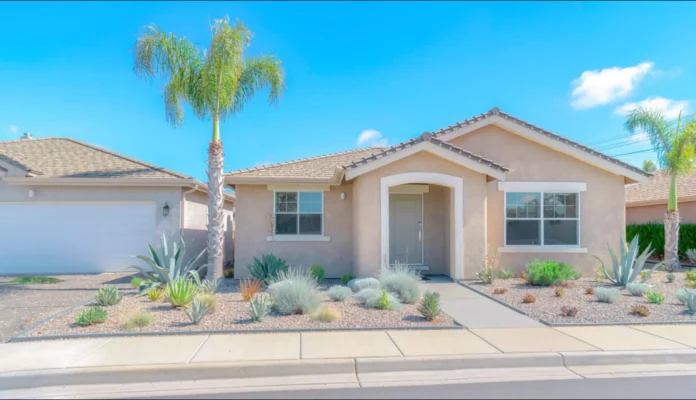
Existing-home sales slid to roughly 3.98 million at a seasonally adjusted annual rate this fall – a 14-month low – as 30-year mortgage rates hovered near 7% and inventory climbed to about 4.9 months’ supply. For buyers, that combination cuts two ways: financing costs more, but the market has slowed enough to give them time to look harder at what they’re actually buying before they commit.
That extra scrutiny is colliding with a home-buying process that has never given buyers much to work with. Disclosure requirements vary widely by state; some require sellers to answer close to 200 questions across a dozen-plus categories; others, like Arkansas, impose no disclosure obligation at all and leave sales “as-is.” Even where disclosure forms exist, they depend on what a seller remembers or chooses to volunteer: recent UK survey data found that more than half of sellers admit to withholding information about property issues, and nearly half of standard surveys turn up problems the listing never mentioned. On the buyer side, national first-time buyer research points to a similar pattern: close to half of recent buyers say they underestimated the true costs of ownership, a gap driven less by dishonesty than by the fact that a standard inspection simply isn’t built to answer questions like how much a home’s utility costs will run relative to comparable properties, or how many years are left on an aging HVAC system.
The result is a structural information gap: the property-level facts that would most affect a buyer’s decision – flood risk specific to a parcel rather than a zip code, permit history, environmental hazards, insurance cost trajectories – exist somewhere in public and private records, but rarely arrive assembled in one place before closing. A small but growing set of services has started trying to close that gap by pulling together permit records, hazard data, environmental filings, and insurance histories into a single consumer-facing report.
Where the Listing Falls Short
Agents are also structurally limited in what they can say. Fair housing rules restrict agents from discussing certain risk categories, such as crime data, directly with buyers. And the hazard information that does appear on listing portals is typically pitched at the neighborhood or zip-code level rather than the individual parcel, useful for a general sense of flood or fire exposure, but not precise enough to tell a buyer whether their specific lot sits in a mapped floodplain or near a contamination site.
John Siegman, co-founder of San Diego-based PropertyLens, has built one version of a consolidated property report aimed at this gap – pulling from roughly 90 data feeds to compile permit histories, hazard assessments, environmental records, utility costs, insurance rate histories, and tax trajectories into a single graded document. “That hazard data is exceptionally general and doesn’t speak to the specific property,” Siegman says of standard listing-portal information. “It speaks to the area. Our hazard data speaks to the property.” Services like his are one response to a gap that a handful of other data and insurtech platforms have also started to address in different forms – through hazard-scoring tools, environmental-risk overlays, and permit-history lookups sold separately or bundled into other closing services.
Reports like these can surface issues a standard inspection wouldn’t catch: proximity to an EPA Superfund site, a flood zone the current owner may not know about, or a permit history suggesting deferred maintenance or an undisclosed flip. According to PropertyLens’s own tracking, users of its reports save an average of about 2.5% on purchase price – a self-reported figure the company hasn’t published methodology for, and one that should be read as a marketing claim rather than an independently verified outcome.
Turning Data Into a Score
One way these reports differ from a raw data dump is in how they present risk. PropertyLens, for instance, opens each report with a letter grade, A through F, meant to give a buyer instant context. According to Siegman, only about 10% of U.S. homes will ever earn an A, and what counts as a strong grade varies by market – a B might be a solid outcome in an expensive metro like San Diego, where the same score of underlying issues would land as an A in a lower-cost market elsewhere.
That kind of grading is also meant to recalibrate expectations rather than just flag problems. A buyer hunting for something move-in ready should be looking for an A or B; a buyer planning a renovation project shouldn’t necessarily be alarmed by a lower grade, provided they understand what’s driving it. Siegman describes friends who grew anxious after three properties they’d checked all came back as Bs. “They were terrified that they weren’t buying an A property,” he says. “I was like, don’t be concerned. B is a good grade.” It’s a small illustration of a bigger adjustment: graded property data is only useful to buyers if they understand it’s relative to a market, not an absolute pass-fail test.
The Agent Side of the Data Shift
Consolidated property reports weren’t originally built with agents in mind, but agents on both sides of a deal have started finding uses for them. With roughly 10% of buyers now representing themselves through self-service platforms, buyer’s agents have an incentive to bring more to the table than access alone, and a detailed property report is one way to do that.
Listing agents have taken a different approach, in some cases pulling a report before a property goes on the market so they can speak more specifically to what’s been updated, then handing it out at open houses as a transparency signal. Siegman says this tends to happen most with clean-record properties: “Houses that have no tales to tell, the realtor loves to hand out a report because that’s the only open house you’re ever going to go to that’s going to have one,” he says.
There’s a defensive angle to this too. Consolidated hazard and permit data has already been used in disclosure litigation; lawyers building cases against agents accused of failing to flag known risks have relied on publicly available hazard reports as evidence. Framed that way, a report serves less as a sales tool and more as a paper trail: documentation that a risk was surfaced before closing rather than discovered after it.
Permits as a Signal, Flips as a Flag
Permit records offer a less obvious form of property intelligence than an inspection or a hazard map. In jurisdictions that require permits for renovation work, a property with a thin permit history can signal deferred maintenance or work that was never brought up to code. Set two comparable listings side by side, and the one with a documented permit trail generally offers more confidence about what’s actually been done to the home.
Flipped properties present a sharper version of the same problem. Buyers often don’t know a home has been flipped, and renovation quality on flips varies widely; permit records can help separate a genuine rehab from what Siegman calls “putting lipstick on the pig,” cosmetic work that papers over deeper issues.
What This Means for Buyers
With only a handful of major metros currently functioning as seller’s markets, most buyers now have more room to slow down and scrutinize a purchase than they did a few years ago. Some in the industry see that shift extending further; Siegman, drawing a comparison to travel agents, argues real estate agents who don’t demonstrate added value beyond access to a home will increasingly be bypassed by buyers working directly from consolidated data. That’s a debated prediction, not a settled one, but it reflects a broader rebalancing already underway: as data access becomes less of an agent’s exclusive advantage, the value agents offer has to come from somewhere else.
For buyers, the practical math is straightforward. A property report costs somewhere in the range of tens to low hundreds of dollars; a problem discovered after closing can cost tens of thousands to fix. In a market where every additional rate point already stretches monthly payments, spending a small amount up front to close the information gap is increasingly the more rational bet.
About the Expert: John Siegman is co-founder of PropertyLens, a San Diego-based consolidated property report service.
This article is based on information provided by the expert source cited above. It is intended for general informational purposes only and does not constitute legal, financial, or real estate advice. Readers should conduct their own research and consult qualified professionals before making any real estate or financial decisions.