
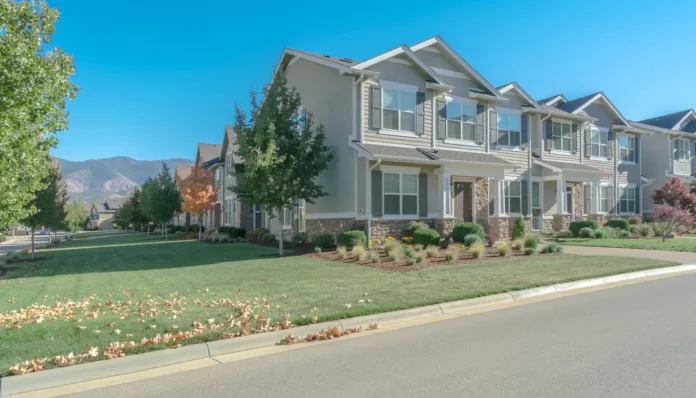
A creditworthy buyer can now be denied a mortgage over something outside their own financial record: low reserves in their homeowners association (HOA) or condo community. Fannie Mae and Freddie Mac, the government-sponsored enterprises that buy and guarantee a large share of U.S. home loans, increasingly treat community reserve funding as a lending risk factor, says Joe Braun. Braun is co-founder and CEO of Solume, a financial management platform for self-managed HOA and condo communities.
The financial health of the community as a whole, not just the individual borrower, is becoming a condition for loan approval. The consequences reach well beyond any single sale.
Hidden Underwriting Risk
Mortgage underwriting has traditionally focused on the borrower’s credit score, debt-to-income ratio, employment history, and loan-to-value ratio. Braun says that framework is no longer enough for buyers in HOA or condo communities.
“More and more mortgage backers are looking at you as the borrower, but what’s the financial health of the community?” Braun says. “If they have poor reserves, they look at that as a bad investment. Even if you could completely afford it on your own.”
The key document is the reserve study. A reserve study is a professional assessment of a community’s physical assets, how long they will last, and the money needed to replace them on schedule. When a community holds far less than its reserve study recommends, Fannie Mae and Freddie Mac may classify the property as a poor risk, regardless of the buyer’s finances.
Braun describes a scenario that can trigger a denial: “They might look at that and say, yes, but this community is going to be facing a $50,000 per unit special assessment in the next five years because they’re at 10% funding or 20% funding.”
Reserve Funding Explained
A reserve study lists everything a community must maintain or replace, such as roofs, parking structures, pools, entry systems, and common-area infrastructure. It then projects the cost of replacing each item over time. The funding percentage compares what the community actually holds in reserves with what it should hold, given the age and condition of its assets.
For example, a community that should hold $1 million but holds only $200,000 is 20% funded. Braun calls that level a serious deficiency. He says Fannie Mae and Freddie Mac now factor these ratios into lending decisions. In affected communities, that makes adequate reserves a condition of mortgage eligibility.
The effect on property values is direct. If buyers in an underfunded community cannot get conventional financing, fewer people can buy. Sellers may face longer listing times, lower offers, or buyers who walk away after learning about the community’s reserves during due diligence.
Boards Face Pressure
The lending trend creates an unexpected incentive in states that do not require reserve studies, Braun says. He estimates that 13 to 16 states have strict reserve study mandates, while many others have no formal requirement. Because Fannie Mae and Freddie Mac review reserves regardless of state law, communities in unregulated states face the same financing risk as those in regulated ones. However, they lack the rules that might push boards to act.
For communities that have never conducted a reserve study, the missing documentation may itself signal risk to underwriters.
As a result, boards in these states face pressure to adopt financial practices beyond what local law requires. The push is coming from the mortgage market, not from regulators.
Closing Reserve Gaps
For boards, the practical starting point is knowing where the community stands. That means commissioning a current reserve study and comparing actual reserves against the recommended level. It also means setting a contribution schedule that closes any shortfall before it affects a resident’s sale. Raising regular contributions gradually spreads the cost across owners over time, rather than leaving it to a sudden special assessment.
Buyers and their agents can check reserves early as well. Before making an offer, they can request the community’s most recent reserve study, its current funding level, and any planned special assessments. Doing so can surface a financing problem before underwriting rather than during it.
Braun sees the lending shift as a lasting change in how residential real estate risk is assessed, not a temporary policy adjustment. Many communities have treated reserve funding as an internal budgeting matter. Lenders now treat it as a market-facing issue. Reserve levels can affect not only what a unit is worth, but whether it can be sold with conventional financing at all.
About the Expert: Joe Braun is co-founder and CEO of Solume, a proptech platform built for self-managed HOA and condo communities.
This article is intended for informational purposes only and does not constitute legal, financial, or investment advice. The views and opinions expressed herein reflect those of the individuals quoted and do not represent an endorsement of any company, product, or service mentioned. Readers should conduct their own due diligence and consult qualified professionals before making any investment decisions.

