
For sellers, a for-sale sign is no longer enough. Across much of the country, buyers who can afford a home on paper are still priced out of it every month. That gap between sale price and monthly affordability is forcing sellers to rethink how they compete for buyers, and price cuts are no longer the only tool on the table.
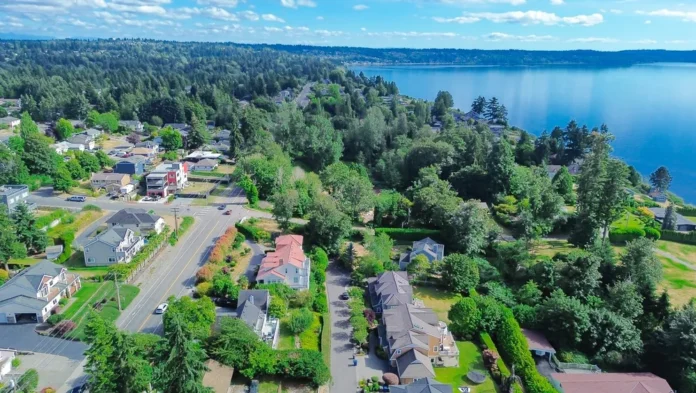
In Kitsap County, Washington, only about 66% of households earning the median income can afford a median-priced home, according to Jim Freeman, Managing Broker & Team Leader at JP Freeman Team, Coldwell Banker Park Shore Real Estate. Rather than lowering prices to close that gap, some sellers are paying to reduce buyers’ mortgage rates instead. Freeman says this strategy sells homes faster and for more money than price cuts alone.
Monthly Payments Drive Affordability
With a median household income of roughly $75,000, many Kitsap County buyers face monthly housing costs of $3,000 to $6,000 that their earnings cannot support. Freeman frames this as a structural mismatch rather than a temporary pricing issue.
“Housing prices are too high,” Freeman says. “The housing affordability index is deteriorating.”
The problem runs deeper than sticker price. Freeman says qualified buyers ask two questions before anything else: how much down and how much a month. As an illustrative example, consider a $500,000 home with a standard mortgage at 6.75%, roughly the middle of today’s 6.5%–7% range. The monthly payment runs about $3,244. Cut the price by 10% to $450,000, and the payment drops to about $2,920, a savings of roughly $324 a month. Instead, keep the price at $500,000 but lower the rate to 4.99%, and the payment falls to about $2,682, a savings of roughly $562 a month, nearly double the price cut’s effect on the same home price. A lower rate also qualifies more buyers for the loan, since it lowers the income needed to cover the payment.
Freeman points out that buyers who secure financing at 4.99% rather than prevailing rates save between $150,000 and $200,000 over the life of a 30-year loan. “Buyers react to monthly payments,” he says. “But once you educate them about the total cost of that borrowing over 30 years and show them the differences in rates and buydowns and how you can structure things, then they get interested.”
Why Builders Kept Selling
Freeman arrived at this strategy by studying what was working while his own listings sat. Publicly traded national homebuilders, including Lennar and PulteGroup, kept selling homes by offering 30-year fixed-rate financing at 4.99% while market rates ran between 6.5% and 7%. Private sellers offering no financing assistance were competing against that spread with nothing but price cuts.
For sellers who resist offering financing help, Freeman lays out the alternative: a price cut of 10% or more may be needed to attract buyers at current rates. Even then, fewer buyers will qualify. Cutting the buyer’s rate this way expands the qualified buyer pool while preserving more of the seller’s equity.
How Rate Locks Work
Freeman found a partner lender willing to offer rate lock certificates to private sellers. He describes these as essentially call options on interest rate futures markets. A seller purchases one for approximately $1,000, locking in a rate for 90 days. At closing, the seller assigns the certificate to the buyer. This gives the buyer the same below-market financing that national builders advertise.
Freeman tested this on a listing that had sat for 60 days with declining showings. Within the first week of marketing the rate lock certificate, the property received eight showings. By the end of that week, three competing offers came in. Competitive bidding recovered a portion of what the seller spent lowering the rate, reflected in the final sale price.
The full cost of lowering a buyer’s rate to 4.99% can run up to 6% of the sale price, or $30,000 on a $500,000 home. Freeman acknowledges seller resistance. “They say, ‘Why should I do that? Nobody did that for me,’” he says. His counter: dropping the price by 10% or more still won’t qualify as many buyers, and the net proceeds are often worse.
The certificate also creates negotiating flexibility that a flat price cut does not. “You can negotiate,” Freeman says. “It can be 4.99%, it can be five and a quarter, it can be five and a half. All you’ve done is created more leverage for you to negotiate on different points to get to a point where it’s satisfactory to both parties.”
Kitsap’s Market Today
Freeman divides housing inventory into quartiles by price. The upper quartiles are experiencing the steepest price drops and longest days on market. Lower-priced homes move faster but still face price reductions before selling. The properties performing best sit in the second and third quartiles and have been rehabilitated to current standards.
Year over year, Freeman says the median home price in Kitsap County is flat or down 1% to 2%. That’s a sharp contrast to the 2% to 5% annual increases seen in the years following COVID. Inventory is more plentiful, canceled and expired listings are rising, and buyer caution is widespread.
“Unless a home buyer just has an absolute need to get into a home now for whatever reason, they’re cautious and rightly so,” Freeman says.
Freeman says he expects conditions could worsen. He points to job losses in the Seattle area, which Freeman estimates at around 20,000 positions cut by Amazon, and business out-migration driven by proposed state tax policy, as headwinds that weaken housing demand in surrounding communities like Kitsap County. Freeman says Seattle’s ranking for startup funding has dropped from near the top nationally to somewhere around 19th or 20th, a figure he attributes to an industry newsletter he follows but does not name.
For sellers in this environment, competing on financing terms, rather than price alone, addresses the real constraint on buyers: the monthly payment. Freeman’s rate lock certificates offer one way to do that. The competitive bidding in his test case suggests that when more buyers can qualify, sellers recover much of what they spend cutting the rate through stronger offers.
About the Expert: Jim Freeman is Managing Broker and Team Leader at the JP Freeman Team with Coldwell Banker Park Shore Real Estate, serving Kitsap County, Washington.
This article is intended for informational purposes only and does not constitute legal, financial, or investment advice. The views and opinions expressed herein reflect those of the individuals quoted and do not represent an endorsement of any company, product, or service mentioned. Readers should conduct their own due diligence and consult qualified professionals before making any investment decisions.

