
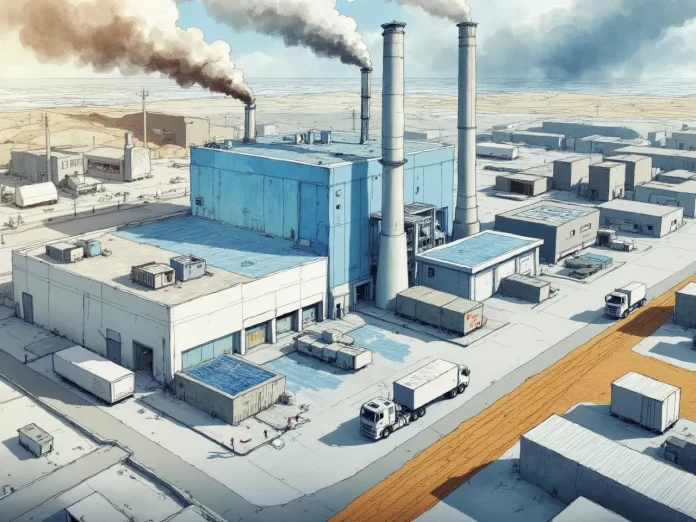
A new wave of demand for industrial real estate is emerging in the Midwest as waste-to-energy technology finally becomes economically viable. Facilities that convert solid waste into energy or fuel products, which were once a niche segment, are now attracting significant attention from brokers and investors, especially in secondary markets.
Steve Zuber, Principal at BARBERMURPHY, reports a marked uptick in energy-focused industrial projects, particularly those that process materials previously sent to landfills. “Waste is a commodity nowadays, and it is a big commodity,” Zuber says, describing how formerly discarded materials are now seen as valuable inputs for energy production.
The technology behind these waste conversion operations is not new, but the economics have changed. Systems that have existed for decades are now cost-effective enough to attract private investment and real estate development. According to Zuber, “Technology’s been in the market for 20 years, but now it’s to the point where it’s feasible and economical to do that.”
Varied Waste-to-Energy Models
Several distinct waste-to-energy approaches are fueling this real estate trend. One involves converting retired coal-fired power plants to run on renewable feedstocks. Zuber explains that some companies are repurposing these plants to use materials such as wood chips and other renewable feedstocks in place of coal, enabling them to generate energy while meeting stricter environmental standards.
Another approach focuses on processing specific waste streams, such as rubber tires. New businesses are emerging that convert tires into biofuels, hydrogen gas, or direct energy. These operations reduce landfill demand and create new industrial needs for processing and storage facilities.
A third approach focuses on mixed solid waste streams. Facilities are being developed to burn materials with a carbon footprint, such as plastics, wood, and rubber, to generate energy and reduce landfill use. Zuber notes that these high-BTU materials are now actively sought for recycling and energy production, and that such facilities are relatively new to the U.S. market.
Illinois as a Case Study
State policy is accelerating the trend in Illinois. Government mandates have led to the closure of traditional power plants and increased pressure to find alternative energy sources. “Illinois has a mandate to go green,” Zuber says, pointing out that the state’s decision to shutter coal plants has left a gap in power generation that needs to be filled.
Solar development has expanded in response, but waste-to-energy projects offer an additional solution. The presence of closed coal plants, available industrial land, and state renewable energy requirements has created favorable conditions for waste conversion facilities to establish a presence.
Economic Drivers Behind the Shift
The timing of this surge is driven by economic and market conditions, not technological breakthroughs. Incremental improvements in process efficiency, combined with rising landfill costs and shrinking disposal capacity, have made waste conversion financially attractive. Materials that once had negative value because of disposal fees are now considered valuable feedstocks for fuel and energy.
“Anything with a carbon footprint” is now evaluated for its energy potential, Zuber explains. As landfill space becomes more limited and disposal costs climb, businesses are increasingly motivated to find profitable uses for waste materials.
A New Era for Industrial Real Estate
Zuber, a 20-year veteran of commercial real estate, sees the current moment as unusually dynamic, with waste-to-energy, data centers, and other technology-driven uses converging to reshape industrial demand. “It’s really one of the most exciting times of my career,” he says, citing the range of new opportunities created by advancing technology and changing economics.
BARBERMURPHY’s focus on secondary and tertiary markets, where industrial land, infrastructure, and proximity to waste streams are readily available, positions the firm to benefit as more waste-to-energy projects move from planning to construction.
Looking ahead, the scale and impact of these technologies will depend on their continued economic viability as they expand beyond pilot projects. If current trends hold, waste-to-energy could become a lasting driver of industrial real estate demand in the Midwest and beyond, as solid waste shifts from a liability to a sought-after commodity.