
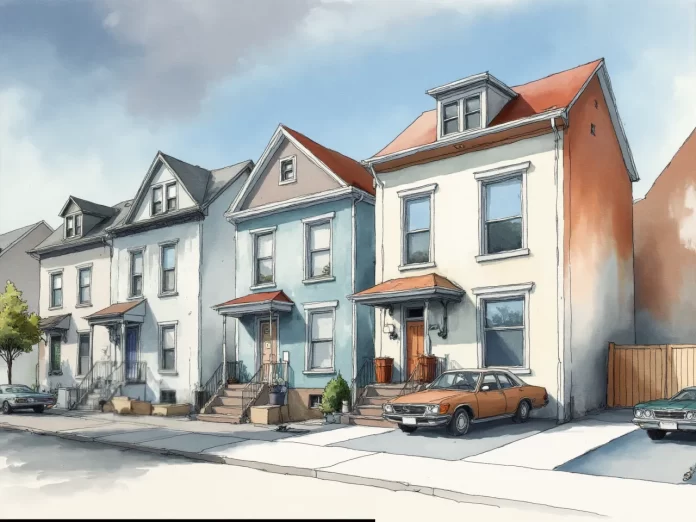
While headlines focus on Brooklyn’s soaring median prices, the real action in New York real estate is happening at the ground level, where the pace of deals is outstripping what most buyers – and even some agents – expect. Patrick Dominique, a realtor at One Stop Agency specializing in Queens, Nassau County, and Brooklyn, says that outdated assumptions about how long listings last are causing buyers to miss out on homes.
According to Dominique, the main disconnect is between what buyers expect and what’s actually happening. Many assume they have weeks, if not months, to make decisions. “Buyers think that listings will be available on the market longer than they actually do stay on the market,” Dominique says. He sees buyers tour a property, wait a month to reevaluate, and are surprised to find it already under contract – often with multiple offers.
In neighborhoods like Cambria Heights and Jamaica, especially for homes priced between $700,000 and $900,000, Dominique reports that properties can go into contract within days, sometimes even before some buyers have had a chance to see them in person.
Accelerating Deal Timelines
Dominique points to recent deals to illustrate how quickly the market is moving. He describes a single-family, four-bedroom, three-bath home in Queens listed at $899,999 that went under contract the day after the buyer’s first visit. These compressed timelines are now standard, he says, marking a clear departure from the market just 18 months ago.
Across Queens and Brooklyn, Dominique says most listings now last about 30 days before going under contract. This rapid turnover is amplified by a historically low vacancy rate – just 1.4% in recent months – which signals extreme supply pressure. With so few homes available, buyers no longer have the luxury of time.
The effect is especially pronounced for those used to slower-moving markets. In areas with higher inventory, taking a few weeks to revisit or reconsider a property was normal. Now, in Queens and Brooklyn, that approach almost guarantees missed opportunities.
Larger Down Payments as a Competitive Tool
Another shift Dominique has observed is in how buyers structure their offers. Where 3.5% down payments were once standard, he now sees many buyers arriving with 20% down. This change is both a response to increased competition and a way to strengthen their position in multiple-offer scenarios.
Putting 20% down signals financial strength to sellers and eliminates the need for private mortgage insurance, lowering monthly payments. This is especially important, since mortgage rates, while down from last year’s highs, remain above the sub-4% rates seen in 2020 and 2021. Dominique notes that buyers are recalibrating their strategies to reflect both the realities of today’s market and the need to stand out in the competition for scarce inventory.
Why Market Data Misses the Story
Dominique emphasizes that aggregate market data, which shows stability in pricing and inventory, does not capture these on-the-ground shifts. “The market is stable, especially Cambria Heights,” he says, pointing out that the neighborhood has weathered past downturns, including the 2008 crisis, without significant price drops.
But price stability doesn’t mean the pace of deals has stayed the same. Dominique’s experience shows that while median prices and appreciation rates may look steady in the data, the actual time homes spend on the market has dropped sharply. Buyers relying only on broad indicators risk misunderstanding what it takes to succeed in today’s market.
For example, someone who interprets “stable market” as an invitation to take their time may find themselves outbid again and again, as homes that appear available one weekend are gone by the next.
The Broader Lesson: Hesitation Now Comes at a Cost
Dominique’s observations highlight a broader problem with how real estate markets are analyzed and reported. Macro-level data on pricing and days-on-market provide helpful context, but they often obscure the micro-dynamics that determine who actually gets a deal done.
For buyers, the message is clear: in markets with tight inventory, waiting to decide can mean missing out entirely. The assumption that a property will remain available while a buyer deliberates is no longer reliable in Queens and Brooklyn, where demand continues to exceed supply.
Looking Forward: Will Velocity Increase?
Whether this rapid pace will continue depends on factors like mortgage rates and new construction. Dominique notes that rates have recently dropped to around 5.5% in some cases, down from 8–9% a year ago. This decline has triggered a surge in pre-approvals, especially among residential buyers. “People are getting pre-approvals left and right,” he says.
If rates remain low or fall further, Dominique expects the pace to accelerate, further shrinking buyer decision windows. In that environment, buyers may need to adjust their strategies yet again, arriving with stronger offers and faster timelines to compete.
In today’s Queens and Brooklyn markets, success depends less on finding the perfect listing and more on being ready to act. Buyers who adapt to this new reality will have the best chance of securing a home before it’s gone.