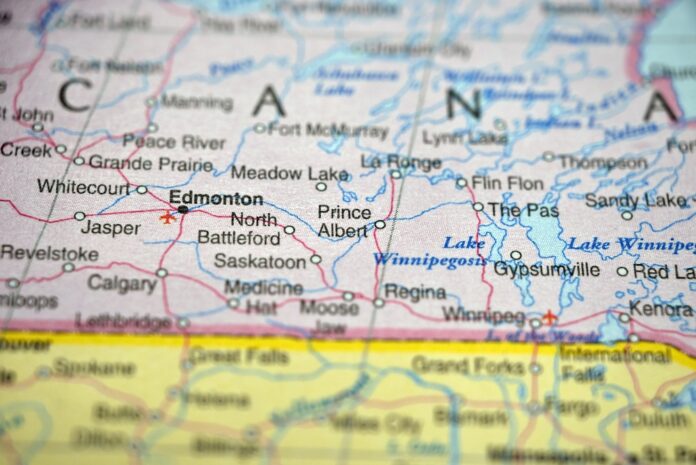
Canada’s luxury real estate market is undergoing a significant geographic shift. For decades, serious wealth concentration and high-end property activity meant Toronto or Vancouver — two cities that effectively defined the upper tier of the Canadian market. According to Mustafa Abbasi, President of Sotheby’s International Realty Canada, that dominance is now loosening, as high-net-worth buyers move capital and primary residences into markets that were barely on the luxury map just a few years ago.
The forces behind this shift are structural, not seasonal. Resource-driven prosperity, tech-sector growth outside major metros, and evolving lifestyle priorities among affluent buyers are redirecting luxury demand toward cities such as Calgary, Kelowna, and Halifax. For buyers, sellers, and real estate professionals alike, understanding this geographic realignment is becoming essential to navigating the Canadian luxury market.
The Two-City Grip Is Loosening
Canada’s luxury real estate market has long operated on a simple geographic logic: serious money meant Toronto or Vancouver, with everything else considered secondary. That logic is breaking down. Abbasi sees growing luxury activity in Calgary, the Okanagan, Quebec, and Halifax — and he distinguishes what’s happening now from the lifestyle migration that has always existed at the fringes of the luxury market. “It’s not lifestyle anymore,” he says. “It’s expansion.”
The difference is meaningful. Primary wealth concentration and genuine investment activity are moving into markets that previously sat entirely outside the luxury tier. That shift carries lasting implications for pricing, inventory, and long-term market development — consequences that go well beyond seasonal or recreational buying patterns.
Where Wealthy Buyers Are Looking
At the top of the market, buyer behavior looks meaningfully different from that in the mid-range and entry-level segments. High-net-worth buyers are less rate-sensitive, more likely to be cash buyers, and increasingly motivated by a combination of lifestyle conviction and investment logic. “If you’ve decided you want to be in Kelowna, Mont-Tremblant, or Rosedale, West Vancouver, that segment of the market is pushing interest rates to the side,” Abbasi says.
International buyers are also re-entering the picture. After the initial disruption caused by Canada’s foreign-buyer ban, Abbasi is seeing renewed interest — particularly from the Middle East and the South Asian diaspora — drawn by Canada’s reputation for safety, multicultural openness, and long-term stability. If the foreign buyer ban is lifted by 2027 or 2028, as some industry observers anticipate, demand could accelerate sharply.
Wealth Creation Beyond Major Cities
A common misreading of the current market is that economic pressure is uniform across all buyer segments. Abbasi pushes back on that directly. Having recently toured Sotheby’s offices across Canada and visited prominent listings in multiple markets, he came away with a clear observation: wealth creation has not stopped. “There is a lot of wealth. You just have to visit the whole country and see what’s happening,” he says.
Resource-driven prosperity in Alberta, growth in professional services outside major metros, and ongoing intergenerational wealth transfer are all generating well-capitalized buyers in markets that would have been considered secondary just a few years ago. The result is a buyer pool that is geographically broader and more diverse than at any previous point in the Canadian luxury market’s history.
Emerging Markets, Stronger Investment Upside
For high-net-worth buyers who recognize that primary urban markets are still pricing in boom-era expectations, secondary luxury markets offer a compelling alternative. Quality inventory is scarce across the luxury segment — sellers at the $3 million-plus level are largely holding, which supports pricing even in softer macro conditions. That scarcity is now more widely distributed across geographies than it has been historically.
A buyer with capital and flexibility can potentially acquire a premium property in Calgary or Kelowna at a price point that offers stronger long-term appreciation than a comparable asset in a saturated Toronto neighborhood. That combination of relative value and constrained supply is increasingly shaping how high-net-worth buyers think about portfolio decisions in the current market.
The Future of Canadian Luxury
Abbasi views the current moment as transitional rather than troubled. The bidding-war conditions of 2021 and 2022 were an anomaly, he argues, and the market is normalizing toward patterns that are healthier and more sustainable for both buyers and sellers. “We’re going back to the way normal real estate behaves,” he says. “And that’s really, really important.”
Looking ahead 12 to 18 months, two variables stand out. The first is the potential lifting of Canada’s foreign buyer ban, which Abbasi believes could significantly accelerate luxury demand. The second is the continued geographic spread of wealth creation across the country. He also sees technology — particularly AI — as a defining factor in how the luxury brokerage landscape evolves, raising the performance ceiling for top agents and the overall standard of client service across the industry.